Majestic golden retriever dog and calico cat resting harmoniously in sunlit architectural sanctuary
✨ Award-Winning Pet Sanctuary & Ethology Codex

Two species. Two souls. One sacred covenant.

An unapologetically deep, veterinary-backed masterwork dedicated to understanding, honoring, and loving dogs and cats with world-class care.

Take Matchmaker Quiz →
🐕

The Canine Essence

Unconditional devotion, outdoor vitality, pack bonds, and dynamic cooperative intelligence. Built for companionship in motion.

Explore Canine Codex →
🐈

The Feline Mystique

Quiet sovereignty, vertical territory, sensory precision, and profound earned trust. Built for serene sanctuary living.

Explore Feline Codex →
⚖️

The Unfiltered Truth

Honest pros and cons without romanticized fluff. 3 AM zoomies, vet emergency funds, separation anxiety, and life-changing joy.

View Truth Matrix →

Soulful portrait of Australian Shepherd dog
🐕 Canis Familiaris

The Science of Boundless Devotion

Dogs did not simply adapt to human society; they co-evolved over 30,000 years to read human facial micro-expressions, gaze into our eyes to trigger oxytocin synchrony, and share our daily rhythms.

  • Olfactory Superpowers: Over 300 million scent receptors that experience time through scent decay.
  • Cooperative Attachment: Secure emotional base theory mirroring parent-child developmental bonds.
  • Daily Rhythm & Drive: Physical stamina paired with intellectual puzzle fulfillment.

Editorial British Shorthair cat with amber eyes
🐈 Felis Catus

The Sovereign Art of Feline Connection

A cat's affection is not given blindly; it is an intimate gift of mutual consent. Felines perceive their home as a continuous scent landscape where vertical hierarchy and predictable territory offer profound safety.

  • Sensory Acuity: Whiskers calibrated to detect air currents and micro-vibrations without touch.
  • Acoustic Healing: Purrs vibrating between 20–140 Hz shown to stimulate bone density and tissue repair.
  • The Predatory Loop: Hunt → Catch → Kill → Eat → Groom → Sleep cycle vital for mental tranquility.


Undecided Between a Dog or Cat?

Take our 5-question lifestyle compatibility quiz to receive a calculated breakdown based on your hours, home space, exercise routine, and care budget.

Launch Compatibility Quiz ⚡ Calculate 10-Year Costs 💰
Energetic dogs running in mountain wildflower meadow
🐕 The Canine Codex

Canine Mastery: Psychology, Routine & Soul

A comprehensive exploration of canine ethology, communication signals, and modern force-free positive reinforcement.

Debunking the "Alpha" Dominance Myth

For decades, obsolete mid-20th century captive wolf studies popularized the dangerous myth that dogs need an aggressive human "pack leader." Modern veterinary behaviorists and ethologists have completely disproven this: domestic dogs view humans as secure attachment figures, not rivals in a dominance hierarchy.

Leading with intimidation creates fear and reactive aggression. Leading with cooperative care, clear cues, and positive reinforcement builds unshakeable lifelong trust.

Golden retriever pup learning playfully

The 4 Canine Energy Archetypes

The High-Drive Athlete

Breeds: Border Collies, Belgian Malinois, Australian Shepherds, Huskies.

Needs: 90–120 mins daily active physical exertion plus complex mental jobs (agility, nosework, herding treibball).

🌿

The Explorer & Scent Hound

Breeds: Beagles, Basset Hounds, Golden Retrievers, Labradors.

Needs: 45–60 mins of sensory "decompression sniff walks" where their nose dictates the pace. Moderate stamina and social curiosity.

🛋️

The Gentle Couch Guardian

Breeds: Greyhounds, Great Danes, French Bulldogs, Cavalier King Charles.

Needs: Short 20–30 min casual strolls followed by enthusiastic 18-hour sleeping routines. Perfect for urban living.

The Canine Visual Dictionary

The Relaxed Tail Wag

Broad, sweeping, loose-hipped wagging biased to the dog's right side indicates positive emotional approach and joy.

The Stiff High Wag & "Whale Eye"

High, rigid, fast vibration wag combined with visible sclera (whites of eyes) signifies high arousal, stress, and boundary defense.

The Play Bow & Yawn of De-escalation

Front elbows on the ground with rear raised is an invitation for fun. Yawning when not tired is an intentional calming signal to self-soothe.

Majestic Maine Coon cat resting in sunlit bay window
🐈 The Feline Codex

Feline Mastery: Territory, Scent & Solitude

Unlocking the secrets of the solitary hunter, vertical enrichment, whisker dynamics, and earned affection.

Designing the Feline Superhighway

Cats view a room in three dimensions, not just floor square footage. In the wild, height represents security, tactical surveying, and predator avoidance. A cat forced to navigate only ground level in a busy household develops anxiety, hiding behaviors, or inappropriate urination.

Installing staggered wall shelves, window perches, and multi-tier cat trees unlocks a 300% larger psychological territory in even the smallest studio apartment.

Serene British Shorthair cat on linen sofa

Whisker Fatigue & The Water Dilemma

🐾

Whisker Stress / Fatigue

Whiskers (vibrissae) are nerve-packed tactile organs. Deep, narrow bowls force sensitive whiskers to scrape the edges repeatedly, causing sensory overload. Solution: Use wide, shallow ceramic or stainless steel plates.

💧

The Running Water Instinct

Cats evolved from desert felines (Felis lybica) who instinctively avoid stagnant water pools due to bacterial contamination risks. Solution: Stainless steel recirculating water fountains increase hydration by over 200%.

🎯

The Predatory Cycle (15 Mins)

Play must mirror nature: Stalk → Chase → Pounce → Catch. End every laser pointer or wand session by letting the cat catch a tangible physical toy, followed immediately by a meal to satisfy the predatory sequence.

Decoding the Secret Feline Dialect

The Sacred Slow Blink (Cat Kiss)

Direct unblinking stare is a threat in feline language. Closing eyes slowly and looking away is the ultimate statement of vulnerability and love. Return the slow blink!

Allorubbing & Head Bunting

Scent glands on cheeks and forehead deposit facial pheromones onto you, creating a shared communal family scent bubble.

The Upright Question-Mark Tail

A tail held straight up with a soft curved tip signifies friendly, confident greetings and receptiveness to interaction.

Dog looking into camera thoughtfully
⚖️ The Unfiltered Analysis

Canine Pros & Cons: The Real Truth

A candid, 360-degree assessment of dog companionship — the profound rewards and the real lifestyle trade-offs.

The 10 Invaluable Pros

10 Advantages

1. Unconditional Emotional Devotion

Dogs form an intense, wholehearted bond. Their joy upon your return home triggers immediate serotonin and cortisol reduction.

2. Mandatory Daily Cardiovascular Health

Dog owners log an average of 2,800 more steps per day, boosting longevity, cardiovascular health, and fresh air intake.

3. Instant Social Bridge & Community

Walking a dog naturally sparks friendly conversations with neighbors, dog park visitors, and local outdoor enthusiasts.

4. Cooperative Intelligence & Training Thrill

Teaching obedience, trick titles, agility, or therapy work provides an immensely satisfying intellectual partnership.

5. Natural Protection & Alert Security

Keen canine hearing and territorial alert barking deter intruders and provide a deep psychological sense of household security.

6. Unstoppable Adventure & Hiking Partner

Dogs are eager companions for camping, trail running, swimming, road trips, and exploring the wilderness.

7. Emotional Therapy & Child Development

Growing up with a dog teaches empathy, responsibility, and emotional resilience in children, while lowering allergy risks.

8. End to Loneliness & Solitude

You are truly never alone; a dog provides continuous comforting physical presence by your feet or by your side.

9. Playful Humor & Stress Dissolution

Silly zoomies, goofy head-tilts, and playful antics break through workplace tension and melancholy instantly.

10. Deep Breed Customization

With hundreds of breeds and mixes, you can find a dog tailored specifically to your size, coat, and energy needs.

The 10 Real-World Challenges

10 Realities

1. 365-Day Weather Inflexible Routine

Freezing blizzards, torrential downpours, or heatwaves — dogs must be walked outdoors 2-4 times every single day without fail.

Mitigation: Quality waterproof gear and indoor canine puzzle enrichment.

2. Inflexible Travel & Boarding Expenses

Spontaneous weekend getaways are over. Quality pet hotels or sitters cost $50–$100 per night.

Mitigation: Build a trusted network of pet-swapping friends or dog-friendly travel habits.

3. Separation Anxiety & Time Constraints

Dogs cannot be left alone for 10-12 hours. Prolonged isolation triggers destructive chewing, barking, and distress.

Mitigation: Midday dog walkers or crate/enrichment protocol.

4. Substantial Lifetime Financial Outlay

Between veterinary bills, monthly insurance, premium food, grooming, and gear, dogs average $1,500–$3,500+ annually.

Mitigation: Secure pet insurance early before pre-existing conditions arise.

5. Housebreaking & Puppy Teething Destruction

The first 6-12 months involve potty accidents, chewed baseboards, shredded shoes, and sleepless nights.

Mitigation: Adopt a house-trained adult dog (2+ years old) or strict crate training.

6. Heavy Shedding, Mud & Odor Maintenance

Double coats shed perpetually. Muddy paws require towel drying at the door after wet walks.

Mitigation: Robot vacuums, high-velocity blow dryers, and paw washing cups.

7. Noise Triggers & Nuisance Barking

Doorbell rings, delivery drivers, or thunder can provoke loud barking that strains neighbor relations.

Mitigation: Desensitization sound training and white noise machines.

8. Strict Rental & Landlord Restrictions

Many apartment complexes enforce breed bans, 25-lb weight limits, and steep monthly pet rents ($50+/mo).

Mitigation: Filter housing in advance and obtain Canine Good Citizen certificates.

9. Physical Strength & Leash Pulling Demands

Walking a 70-lb reactive dog requires physical strength and vigilant environmental scanning.

Mitigation: Front-clip Y-harnesses and loose-leash reward conditioning.

10. The Heartbreak of Shorter Lifespans

Larger dogs often live only 8–12 years, making veterinary hospice and eventual grief an inevitable reality.

Mitigation: Cherish every season and prioritize preventive senior wellness.
Regal cat on couch looking thoughtfully
⚖️ The Unfiltered Analysis

Feline Pros & Cons: The Real Truth

An honest, clear-eyed examination of cat companionship — tranquility, independence, and the subtle challenges.

The 10 Invaluable Pros

10 Advantages

1. Extreme Spatial & Living Efficiency

Cats thrive in compact urban apartments and studios. Their vertical territory utilization maximizes space without needing a yard.

2. Zero Outdoor Rain or Snow Walks

Litter box training is natural and innate. You never have to stand in sub-zero sleet at 6:00 AM waiting for a bathroom break.

3. Natural Quiet & Serene Atmosphere

Cats do not bark at delivery drivers or passing cars. Their gentle meows and soft purrs maintain a deeply tranquil home.

4. Self-Sufficient Independence

Cats are content sleeping 12–16 hours while you work at the office or focus without demanding constant physical entertainment.

5. Fastidious Self-Grooming Cleanliness

Feline papillae tongues groom constantly. Cats rarely need baths and do not carry wet-dog odors into your furniture.

6. Remarkable Longevity (15–20+ Years)

Indoor cats regularly live well into their late teens and early twenties, offering decades of quiet companionship.

7. Lower Lifetime Cost & Food Footprint

Consuming 3–5 ounces of food daily compared to pounds for a dog significantly reduces recurring monthly expenses.

8. Sublime Acoustic Purr Therapy

Scientific studies confirm cat purrs lower blood pressure, soothe insomnia, and release tension after grueling days.

9. Respect for Personal Boundaries

Cats understand personal space and quiet co-existence — working beside you peacefully without jumping or pawing incessantly.

10. Natural Pest Deterrence

Keen predatory reflexes ensure rodents and intrusive bugs are swiftly tracked and eradicated from living spaces.

The 10 Real-World Challenges

10 Realities

1. Mandatory Daily Litter Box Maintenance

Scooping waste 1-2 times daily and managing clay tracking dust is an inescapable non-negotiable duty.

Mitigation: High-wall stainless steel boxes, low-dust tofu/cassava litter, and litter mats.

2. Furniture & Carpet Scratching Instincts

Scratching is an essential feline scent-marking and claw-sheath shedding necessity. Without outlets, sofas suffer.

Mitigation: Heavy sisal scratching posts placed directly near favorite lounging perches.

3. Nocturnal 3 AM "Zoomies" & Activity

Crepuscular biology means peak energy occurs at dawn and dusk. Unspent energy manifests in 3 AM sprinting across beds.

Mitigation: An intensive 15-minute wand play session right before bedtime followed by dinner.

4. Evolutionary Sickness Masking

In nature, showing pain makes a cat prey. Cats disguise kidney disease, dental pain, and arthritis until it is advanced.

Mitigation: Bi-annual bloodwork chemistry panels and baby-scale weight tracking.

5. Hairballs & Digestive Regurgitation

Ingested hair during grooming occasionally results in wet hairballs deposited onto rugs and bedding.

Mitigation: Weekly de-shedding brushing and natural psyllium husk fiber.

6. Extreme Finickiness with Diet & Changes

Cats imprint on food textures and flavors. Sudden dietary changes can cause hunger strikes risking hepatic lipidosis.

Mitigation: Transition diets slowly over 14 days by 10% increments.

7. Misunderstood "Aloof" Perceptions

Those expecting immediate dog-like exuberance may feel rejected by a cat's slow, boundary-testing trust building.

Mitigation: Practice the 3-second petting consent rule and respect cues.

8. Feline Urinary Blockage Vulnerabilities

Male cats are prone to sterile cystitis and urethral obstructions from low moisture diets — an expensive $3k ER emergency.

Mitigation: 100% moisture-rich wet/raw feeding and filtered water fountains.

9. Higher Human Allergen Sensitivity (Fel d 1)

The Fel d 1 protein in cat saliva and sebaceous glands is small, airborne, and twice as prevalent as dog allergens.

Mitigation: HEPA air purifiers and egg-protein neutralizing cat foods.

10. Strict Indoor Safety Boundaries

Allowing outdoor free-roaming shortens lifespans drastically due to cars, predators, and toxins; catios/leashes required.

Mitigation: Screened window perches or secure outdoor catio enclosures.
Dog and cat together
⚔️ Head-to-Head Evaluation

Canine vs Feline: The Decision Matrix

A side-by-side comparative analysis of 12 lifestyle factors, paired with our interactive compatibility calculator.

Question 1 of 5

Loading Lifestyle Question...

Your Lifestyle Match Result

--% Canine Match
--% Feline Match

Companion Synthesis

12-Point Head-to-Head Breakdown

Lifestyle Vector 🐕 The Canine Reality 🐈 The Feline Reality
1. Daily Time InvestmentHands-on commitment 2 to 4 hours daily (walks, feeding, training, play, socialization). 30 to 60 minutes daily (litter, feeding, interactive wand play).
2. Living Space / Square FootageHome requirements Prefers yards or quick ground-floor outdoor access for potty trips. Thrives in compact studios & apartments via vertical cat perches.
3. Travel & Weekend FlexibilityAway from home Strict: Requires dog hotel, trusted sitter, or bringing dog along. Flexible: Can be left overnight with automatic feeder & water fountain.
4. Recurring Monthly BudgetFood, vet, insurance $120 – $300+ / month (higher food volume & vet premiums). $70 – $160 / month (lower food intake & standard vet needs).
5. Hygiene & Waste DisposalBathroom protocol Outdoor walks with waste bags in all weather conditions. Indoor litter box scooped daily in privacy of home.
6. Emotional Affection DynamicBonding nature Direct, overt, eager-to-please unconditional devotion. Earned, subtle, consent-based, quiet companionship.
7. Noise & Neighborhood ImpactAcoustic profile Audible alert barking, whining, and greeting excitement. Virtually silent; soft meows, purrs, and quiet chirps.
8. Average LifespanLongevity expectation 10 to 14 years (shorter for giant breeds, longer for toy). 14 to 20+ years (often outliving canine counterparts).
9. Trainability & TasksCooperative learning High: Eager to learn complex obedience, sports, and retrieval. Clicker-trainable for targets, but operates on intrinsic motivation.
10. Physical Exercise PartnerOutdoor stamina Superb: Capable of 5-10 mile mountain hikes and trail runs. Indoor sprinter: Prefers short explosive play bursts indoors.
11. Human Allergy ImpactDander & saliva Can f 1 protein; manageable with regular baths and grooming. Fel d 1 protein; light, airborne, and triggers stronger reactions.
12. Landlord & Rental FrictionHousing ease Frequent weight/breed restrictions and pet deposits. Generally welcomed with lower deposits and fewer restrictions.
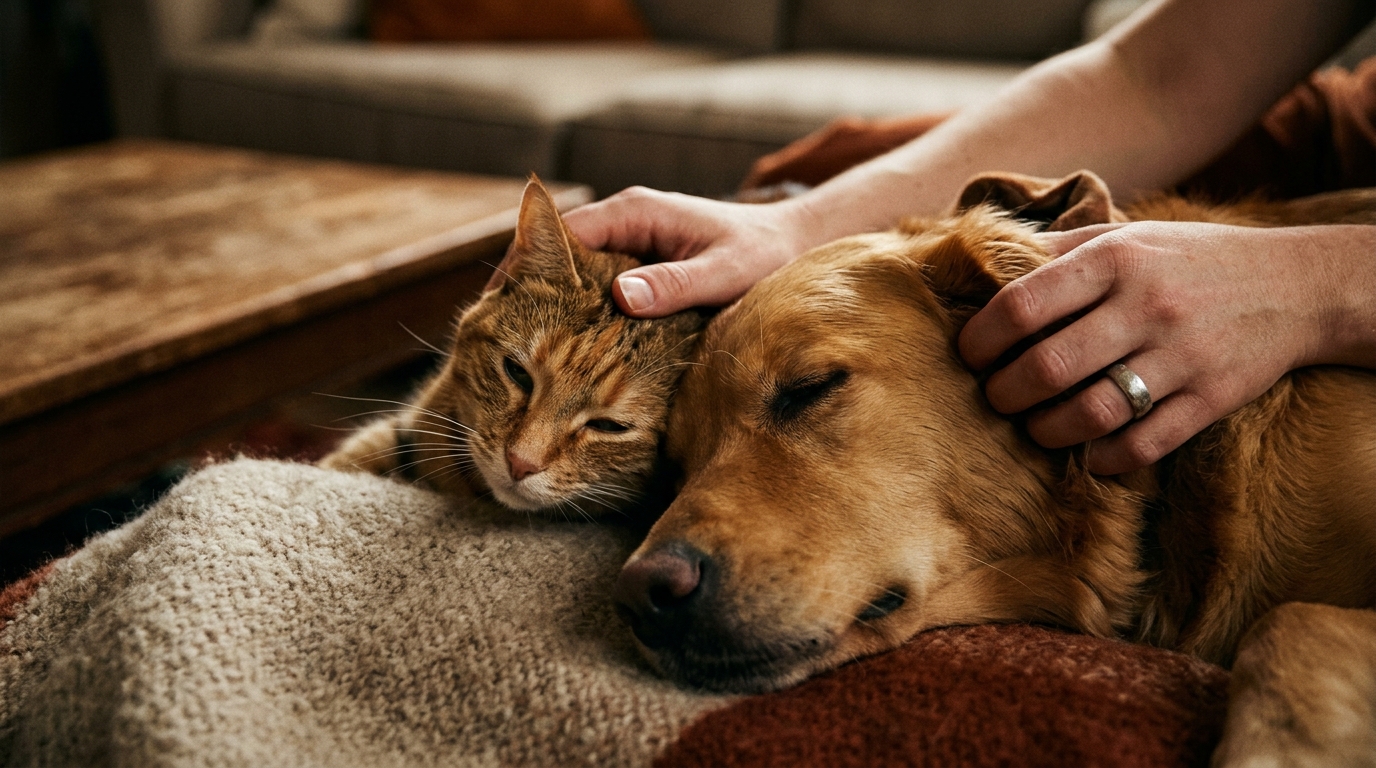
Gentle human hands stroking sleeping dog and cat
❤️ Heart & Mind

The Art of Loving & Deep Emotional Connection

Neuroscience of the human-animal bond, the petting consent protocol, and honoring the sacred emotional life of pets.

The Oxytocin Feedback Loop

When a human and a beloved dog or cat look gently into each other's eyes in a calm environment, both species experience a measurable surge in oxytocin — the exact neuropeptide responsible for maternal bonding and trust.

Unlike forced interactions, genuine bonding flourishes through predictability, gentle soft-spoken voices, and granting the animal absolute agency over their physical body.

Close-up pet bonding

The 3-Second Petting Consent Protocol

How to ask an animal if they genuinely want to be touched instead of assuming compliance:

Step 1: Gentle 3-Second Stroke

Pet the dog on the side of the chest or chin (avoid patting top of head) or pet the cat on the cheek scent glands for exactly 3 seconds.

Step 2: Remove Hands Completely

Pull your hands back 6 inches and freeze. Observe the animal's spontaneous body language.

Step 3: Read the Response

"YES": Nudges your hand, leans in, or purrs/wags softly.
"NO": Looks away, licks lips, shifts posture, or stays still. Honor their pause!

Fresh salmon, chicken, blueberries and bone broth for pets
🥗 Holistic Wellness

Species-Appropriate Nutrition & Toxic Vault

The biological foundations of canine and feline wellness, hydration dynamics, and instant emergency hazard lookup.

Obligate Carnivores vs Adaptive Omnivores

Cats (Obligate Carnivores): Must obtain essential nutrients like Taurine, Arachidonic Acid, and Pre-formed Vitamin A directly from animal muscle tissue and organs. Cats lack metabolic pathways to synthesize them from plant matter.

Dogs (Adaptive Omnivores): Evolved extra amylase gene copies (AMY2B) allowing efficient digestion of complex carbohydrates alongside high-quality proteins and healthy omega fats.

Fresh wholesome pet nutrition

The Toxic Hazard & Safe Foods Checker

Instant search database of foods, plants, and household items. Type any food name to check immediate danger levels and veterinary protocols.

🔍
Veterinarian examining dog and cat gently
🩺 Clinical Care

Lifelong Health, Vital Signs & Emergency First-Aid

Critical clinical benchmarks, CPR triage protocols, home first-aid kit checklists, and preventive health milestones.

Normal Vital Signs Cheat Sheet

Vital Sign 🐕 Dogs 🐈 Cats Clinical Meaning
Body Temperature 101.0°F – 102.5°F (38.3°C – 39.2°C) 100.5°F – 102.5°F (38.1°C – 39.2°C) >104°F indicates fever/heatstroke; <99°F indicates hypothermia/shock.
Resting Heart Rate 60 – 140 BPM (smaller = faster) 140 – 220 BPM Check pulse on inner femoral artery of hind thigh.
Resting Respiratory Rate 15 – 30 breaths / min 20 – 30 breaths / min Count chest rises while sleeping. Open-mouth panting in cats is an ER alert!
Gum Color & CRT Healthy Bubblegum Pink (<2 sec refill) Healthy Bubblegum Pink (<2 sec refill) Pale/white indicates anemia/shock; blue/purple indicates hypoxia.

Emergency CPR Protocol

Step-by-Step
1

Check ABCs (Airway, Breathing, Circulation)

Open mouth gently, clear vomit/mucus, check for chest movement and femoral pulse for 10 seconds.

2

Position Pet on Right Side

Lay animal flat on a firm surface, spine facing you, head and neck extended straight.

3

Chest Compressions (100–120 / min)

Place hands over widest part of ribcage (dogs) or compress directly behind elbows with one hand (cats/small dogs). Compress 1/3 to 1/2 chest depth to the beat of "Stayin' Alive".

4

Rescue Breaths: 30 Compressions to 2 Breaths

Close muzzle firmly with your hands, cover both nostrils with your mouth, and deliver 2 quick breaths until chest gently rises.

Home First Aid Kit Must-Haves

Essentials

Self-Adhesive Cohesive Wrap (Vet Wrap)

Sticks to itself without pulling fur, perfect for securing wound dressings.

Sterile Saline & Chlorhexidine 2%

For flushing eye debris and cleaning cuts safely without toxic stinging.

Digital Rectal Thermometer & Water-Soluble Gel

The only accurate way to evaluate fever or hypothermia in home emergencies.

Styptic Powder (Quick-Stop) & Tick Spoon

Instantly stops bleeding from broken claws and removes embedded ticks whole.

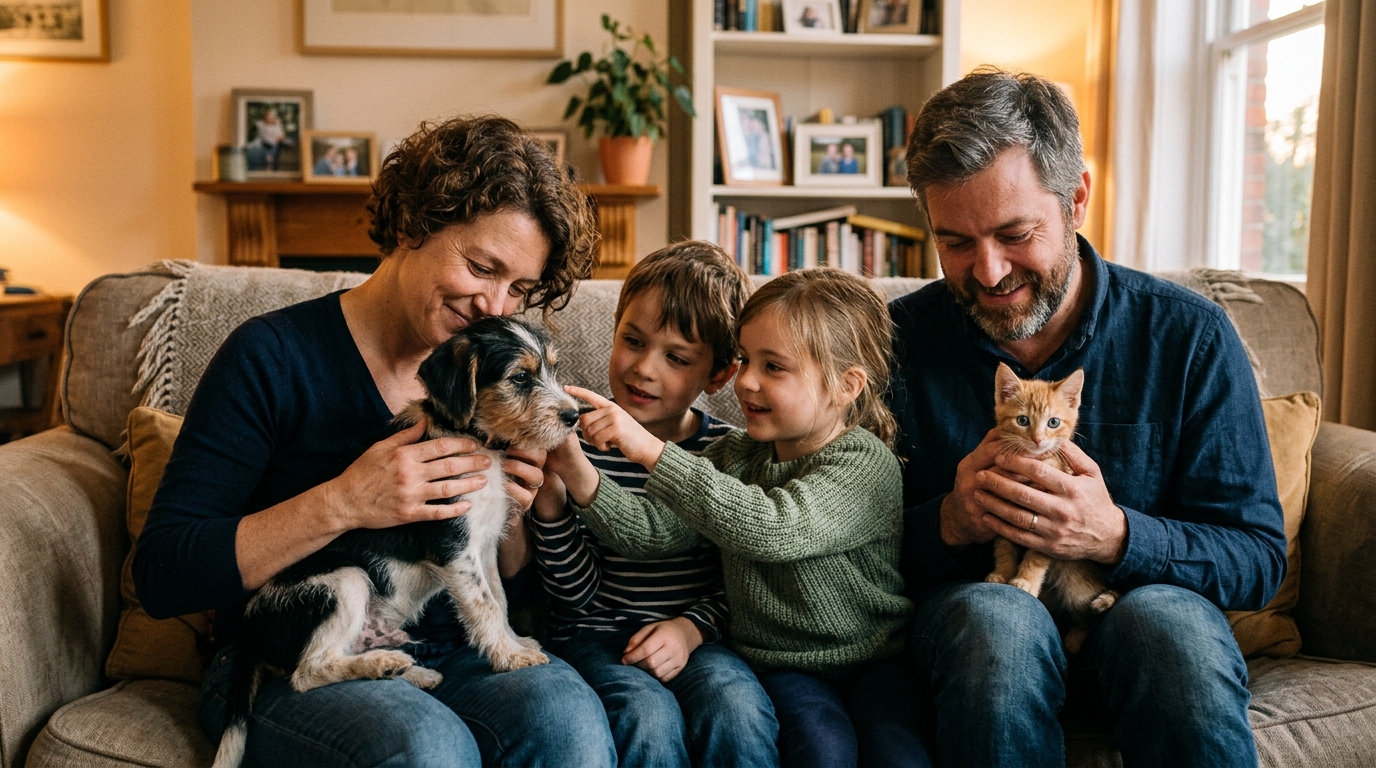
Family holding rescued puppy and kitten tenderly
🏡 The Rescue Roadmap

The Adoption Journey & The 3-3-3 Rule

A compassionate, trauma-informed guide to transitioning shelter pets and creating multi-species harmony.

3 Days

Phase 1: Deep Decompression & Sensory Overload Relief

The pet is overwhelmed, terrified, and releasing shelter cortisol. They may refuse food, hide under sofas, sleep for 18 hours, or exhibit nervous pacing. Goal: Zero visitors, minimal handling, calm room sanctuary, soft classical music, and predictable quiet meals.

3 Weeks

Phase 2: Learning Daily Routines & True Personality Reveal

The pet realizes they are not going back to the shelter. Guard is lowered, true energy levels emerge, and testing of boundaries begins. Goal: Establish ironclad consistent schedules for feeding, bathroom breaks, and gentle positive training cues.

3 Months

Phase 3: Sacred Trust, Family Bond & True Home

The animal feels completely safe, secure, and bonded. Attachment is solid, quirks are integrated, and unconditional love blossoms into lifelong family devotion.

How to Introduce a Cat and a Dog Safely

Stage 1: Scent Swap

Keep in separate rooms. Rub towels on each pet and place under the other's food bowl so positive eating is paired with the scent.

Stage 2: Visual Barrier

Introduce through a sturdy tall baby gate. Feed treats on opposite sides when both remain calm and non-fixated.

Stage 3: Leashed Coexistence

Dog on loose leash, cat free with high escape vertical routes (cat tree). Reward dog for looking away from cat.

Dog and cat sitting peacefully
💰 Financial Planning

Lifetime Pet Cost & Budget Simulator

Real-world financial clarity. Calculate first-year upfront setup costs and 10-year lifetime projections tailored to your pet's size and care standard.

First-Year Setup Outlay
$1,740
Adoption, bed, crate, vaccines, microchip
Monthly Recurring Average
$198/mo
Food, treats, insurance, preventatives
10-Year Lifetime Projection
$25,500
Estimated complete decade investment
Siberian husky in snow
📸 Fine Art Showcase

The Fine Art Companion Gallery

Editorial portraits capturing the majesty, tenderness, and character of purebred and rescue companions.

Wise cat looking ahead
🔍 Scientific Truth

Animal Psychology Mythbusters

12 widespread canine and feline myths dismantled by modern veterinary science and animal behavior studies.

The Reality: An Oregon State University landmark study showed that 64% of domestic cats form secure attachment bonds with their owners identical to human infants and dogs. Cats show affection subtly through micro-proximity, scent-marking, and slow blinks rather than exuberant jumping.
The Reality: The original alpha wolf theory was recanted by its own author, Dr. David Mech, after realizing wild wolf packs are simply cooperative family units led by parents. Domestic dogs learn faster, build stronger recall, and exhibit 80% fewer fear-aggression triggers under positive reward reinforcement.
The Reality: A wagging tail simply indicates emotional arousal. A stiff, high, rapid wag accompanied by tense posture and direct eye contact signals impending defensive aggression. Look at the whole body (loose hips vs rigid spine).
The Reality: Aging is non-linear. A one-year-old dog or cat is physiologically equivalent to a 15-year-old human teenager. By age two, they equal roughly 24 human years. Each subsequent year equals approximately 4–5 human years depending on size.
The Reality: While cats purr when content, they also purr when in severe pain, giving birth, or dying as an internal self-healing mechanism. The 25–50 Hz acoustic frequency promotes bone regeneration and pain relief.
The Reality: Cognitive scientist Dr. Alexandra Horowitz proved that the "guilty look" (lowered ears, avoidance of gaze) is actually an appeasement reaction to human angry posture and vocal tone, not moral comprehension of past events.
The Reality: Absolutely fatal. Cats are obligate carnivores requiring pre-formed animal nutrients like Taurine. Depriving a cat of meat causes irreversible dilated cardiomyopathy, retinal blindness, and death.
The Reality: With proper gradual desensitization and scent swapping, millions of dogs and cats form profound friendships, sleeping curled together, grooming each other, and playing daily.